
Keynote Speakers
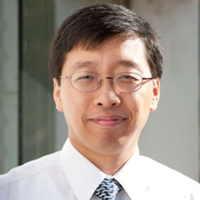
Prof. Richard (Chunhui) Yang
Western Sydney University, Australia
Prof Richard Yang is an internationally recognised research leader on fields of research include Advanced Manufacturing, Additive Manufacturing (3D printing) of concrete, metals, polymers and composites, Advanced Engineering Materials & Structures, Circular Manufacturing & Circular Economy, Defence Technology, Industry 4.0, Machine Condition Monitoring (MCM) & Structural Health Monitoring (SHM), Metal Forming, Metal Surface Treatment, etc. He has been awarded over $15m in competitive research grants, including 13 ARC grants (1 ARC Training Centre, 3 DPs, 3 Linkages, and 6 LIEFs), 2 CSIRO/NSF Convergence Accelerator Program Projects on recycled plastic waste as well as more than 30 from government and/or industry. As for scientific publication, he has more than 300 high-quality technical publications in top scientific journals, books, and conferences as a major contributor in his relevant fields of research across Mechanical, Mechatronic, Manufacturing, Materials, Aerospace, Civil, Defence, etc. As for external services, he is serving as assessor for ARC, editor board member, conference committee member, reviewer of international journals and conferences, examiner for Master and PhD thesis, etc. He is Editor-in-Chief of 2 scientific journals, Associate Editor of 2, and on the Editorial Board of 5. He has been on the ANSHM Executive and the Editor of ANSHM Newsletter since 2016.
Speech Title: Upcycling Polymer Materials Using Innovative 3d Printing Technology
Abstract: The white pollution is one of the biggest
challenges to the world. Plastic recycling is a pressing global environmental
issue; with a staggering 8.3 billion metric tons of plastic produced since 1950.
Only 9% of this plastic waste has been recycled, while the remaining 80% ends up
in landfills, oceans, and other water bodies. Additive manufacturing technology,
also widely known as 3D printing technology, offers a promising innovative and
circular solution to reuse, recycle and repurpose thermoplastic waste. By
utilising this innovative technology, the recycled thermoplastic materials can
be reused, which leads to streamlined production, waste reduction, and improved
sustainability and circularity.
This study aims to reuse recycled polyethylene terephthalate (rPET) and
glycol-modified polyethylene terephthalate (rPETG) thermoplastics with fused
granulate fabrication (FGF) as a novel additive manufacturing technique. It
focuses on the effects of FGF printing parameters on material properties and
mechanical behaviours of FGF-printed rPET and rPETG materials, which are
fabricated using a GigaBot X FGF printer from Re:3D, USA. The design of
experiments (DOE) is performed considering main FGF printing parameters, e.g.,
layer thickness, infill density and number of contours. Scanning electron
microscopy (SEM) and Fourier transformation infrared (FTIR) spectroscopy is used
to observe fracture morphology and chemical structure of post-FGF-printed
materials. Finite element-based multiscale modelling of FGF-printed materials is
developed considering intrinsic structure to predict their mechanical
behaviours. Investigations are then carried out to study effects of these key
FGF printing parameters on material properties of FGF-printed materials. The
study demonstrates the potential of rPET and rPETG as sustainable alternatives
to virgin materials and provides insights into optimal processing conditions for
achieving high-quality FGF-printed recycled thermoplastic materials.

Prof. Henry Hu
University of Windsor, Canada
Dr. Hongfa (Henry) Hu is a tenured full Professor at Department of Mechanical, Automotive & Materials Engineering, University of Windsor. He was a senior research engineer at Ryobi Die Casting (USA), and a Chief Metallurgist at Meridian Technologies, and a Research Scientist at Institute of Magnesium Technology. He received degrees from University of Toronto (Ph.D., 1996), University of Windsor (M.A.Sc., 1991), and Shanghai University of Technology (B.A.Sc., 1985). He was a NSERC Industrial Research Fellow (1995-1997). His publications (over 200 papers) are in the area of magnesium alloys, composites, metal casting, computer modelling, and physical metallurgy. He was a Key Reader of the Board of Review of Metallurgical and Materials Transactions, a Committee Member of the Grant Evaluation Group for Natural Sciences and Engineering Research Council of Canada, National Science Foundation (USA) and Canadian Metallurgical Quarterly. He has served as a member or chairman of various committees for CIM-METSOC, AFS, and USCAR. His current research focuses on materials processing and evaluation of light alloys and composites. His recent fundamental research is focussed on transport phenomena and mechanisms of solidification, phase transformation and dissolution kinetics. His applied research has included development of magnesium automotive applications, cost-effective casting processes for novel composites, and control systems for casting processes. His work on light alloys and composites has attracted the attention of several automotive companies.
Speech Title: Influence of Corrosion on Mechanical Properties of PSMC Al Alloy A356 for Automotive Applications
Abstract: Aluminum alloy A356 was prepared by permanent steel
mold casting (PSMC). To determine the influence of corrosion on the mechanical
behavior and energy-absorption capability of the alloy, the as-cast PSMC A356
alloy was immersed in 3.5 and 10.0% corrosive solutions and mechanically tested.
The results of tensile tests showed that the ultimate tensile strength (UTS),
yield strength (YS), elongation (ef), modulus, tensile toughness and resilience
of the as-cast alloy decreased from 182.84 MPa, 111.86 MPa, 2.5%, 65.03 GPa,
3.68 MJ/m3, and 96.20 kJ/m3 to 135.40 MPa, 68.27 MPa, 2.3%, 34.13 GPa, 2.34
MJ/m3, and 68.28 kJ/m3 for 3.5% solution, and 115.07 MPa, 60.36 MPa, 1.9%, 26.83
GPa, 1.67 MJ/m3, and 67.91 kJ/m3 for 10.0% solution. The corrosion caused
significant degradation in strength, ductility, and resilience of the alloy,
with more pronounced deterioration at higher corrosion concentration. The
microstructure analyses with help of scanning electron microscopy (SEM) and
energy-dispersive spectroscopy (EDS) revealed that the presence of corrosion
pits and the formation of corrosion products on the surface of the corroded
alloy could promote the crack initiation and growth. These findings indicated
that corrosion severely compromised the load-bearing capacity and elastic energy
absorption of the alloy, highlighting the importance of corrosion control for
maintaining long-term mechanical reliability in service environments.
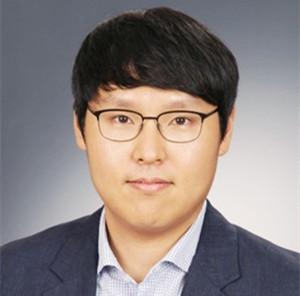
Prof. Doo-Yeol Yoo
Yonsei University, South Korea
Doo-Yeol Yoo is a Professor in the Department of Architecture and Architectural Engineering at Yonsei University, Seoul, Korea, and an Affiliate Professor in the Department of Civil Engineering at the University of British Columbia, Vancouver, Canada. With over a decade of expertise in Ultra-High-Performance Fiber-Reinforced Concrete (UHPFRC), cement-free binders, CO₂-sequestering concrete, and multifunctional cementitious composites, he is internationally recognized as a leading researcher in these fields. His scholarly contributions have garnered 16,193 citations and an h-index of 69 (Scopus). He has published more than 290 peer-reviewed international journal papers, one book chapter, and holds 12 domestic patents related to construction materials and structural engineering. He has also led 29 competitive research projects, with total funding exceeding USD 3.9 million. His work includes nine Highly Cited Papers (Web of Science) and thirteen highly cited and downloaded papers in Elsevier journals. Over the past decade, his research has achieved an average Field-Weighted Citation Impact (FWCI) of 2.53 (SciVal), demonstrating that his work is cited more than twice as often as the global average in his field. His impact is evidenced by numerous prestigious honors. He received the Wason Medal from the American Concrete Institute (ACI) in 2025, was elected a Fellow of the International Association of Advanced Materials (IAAM) and has been consistently listed among the World’s Top 2% Scientists (Stanford University/Elsevier, 2021–2024), where he was further ranked 50th globally in the Building & Construction field by c-score (Elsevier). He is also the recipient of the Presidential Young Scientist Award of Korea and has been elected a member of the Young Korean Academy of Science and Technology (Y-KAST). His additional distinctions include the HYU Young Researcher Award (Hanyang University), the Best Paper Award from the International Journal of Concrete Structures and Materials (Springer Nature), and the Ministerial Commendation from the Ministry of Education, Korea. Beyond his research achievements, he has actively contributed to the international research community, serving on the organizing and technical committees of several major conferences. He currently holds editorial roles as an Editor of the journal of Developments in the Built Environment, Associate Editor of the Alexandria Engineering Journal and as a member of the editorial boards of several leading journals, including Cement & Concrete Composites, Scientific Reports, and npj Materials Sustainability, among others.
Speech Title: Cement-Free Ultra-High-Performance Concrete: Calcium-Activated Low-Carbon Systems with Surface-Refined Fibers for Sustainable and Resilient Structures
Abstract: Ultra-High-Performance Concrete (UHPC) offers
exceptional mechanical properties but faces challenges including high costs,
substantial CO₂ emissions, and issues related to fiber orientation. This keynote
presents recent advances in developing more sustainable and high-performance
UHPC systems. The presentation first examines the influence of fiber orientation
on the mechanical behavior of UHPC using advanced 2D image analysis and 3D
micro-CT scanning techniques, highlighting effective strategies for fiber
alignment control. To improve sustainability, novel cementless UHPC systems
activated by alkali and calcium-based materials were developed. In particular,
calcium hydroxide-activated slag-based UHPC demonstrated superior compressive
and tensile performance compared to conventional cement-based UHPC, while
significantly reducing CO₂ emissions. Surface-refined steel fibers, treated
through chemical and nano-coating methods, were introduced to achieve excellent
strain-hardening and multiple-cracking behavior even at reduced fiber contents.
Digital Image Correlation (DIC) analysis confirmed enhanced microcrack control
and energy absorption. Finally, the structural application of the developed
low-carbon UHPC is demonstrated through the retrofitting of reinforced concrete
columns, showing substantial improvements in load-carrying capacity, toughness,
and cover spalling resistance. This keynote emphasizes the potential of
next-generation sustainable UHPC to meet both high-performance and environmental
demands in future construction.